
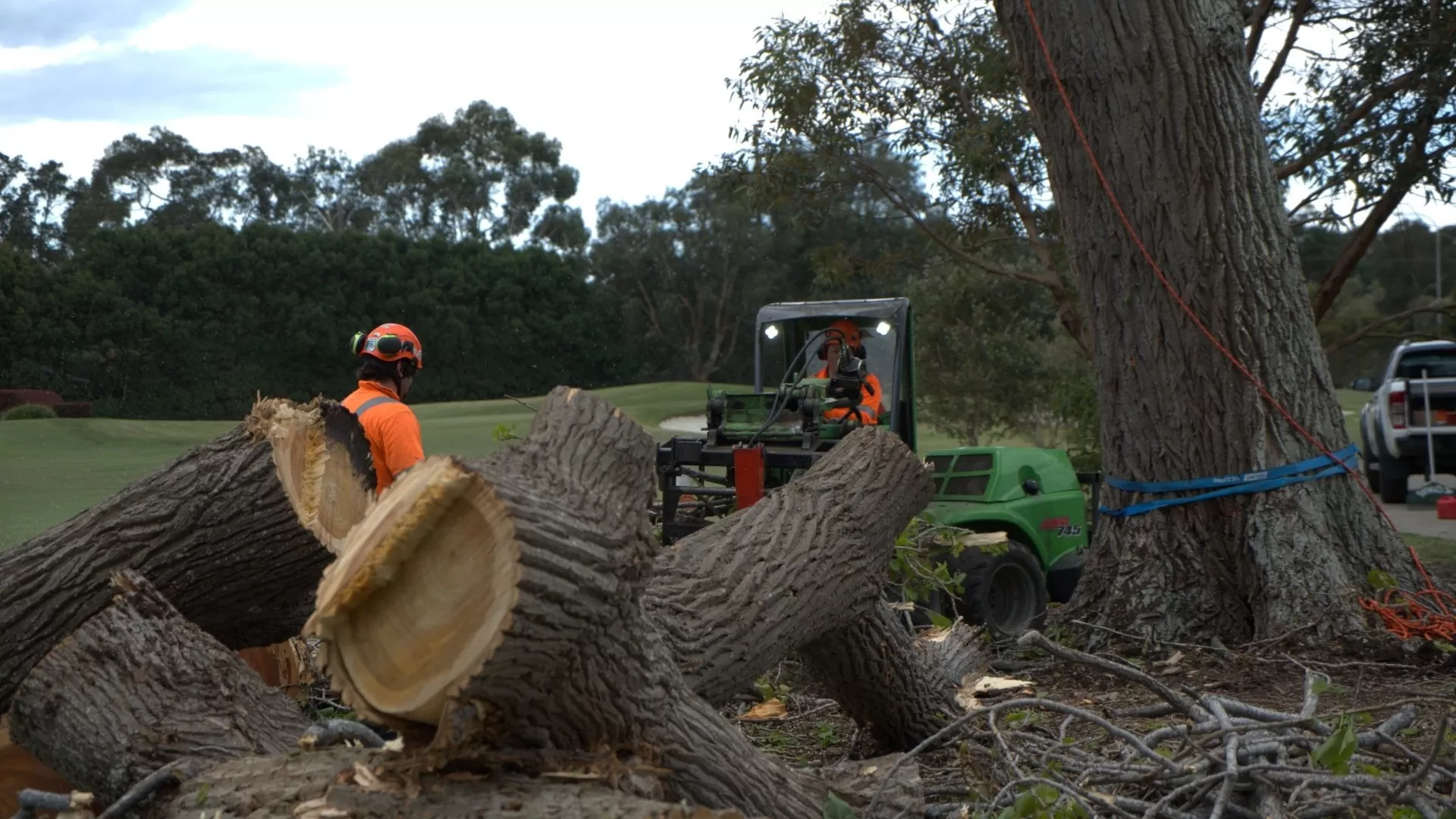
If you have searched for tree removal Sydney, you are almost certainly looking at one of three situations: a tree that has become genuinely dangerous, a tree that is wrecking a driveway, roof or pipe, or a tree that simply has to go before building work can start. Whatever the trigger, removal in Sydney is rarely as simple as booking someone with a chainsaw. The city has tight blocks, protective tree laws, overhead power lines and some very large eucalypts growing very close to houses. This guide walks through what actually matters.
Why Tree Removal in Sydney Is Its Own Beast
Sydney suburban tree stock is dominated by mature natives: spotted gums, blackbutts, turpentines, Sydney blue gums and angophoras, plus a heavy layer of imported problem species like camphor laurel, cocos palm and liquidambar. Many of these were planted or self-seeded decades ago when blocks were bigger. Today the same trees sit metres from a boundary fence, a neighbour pergola or a shared driveway.
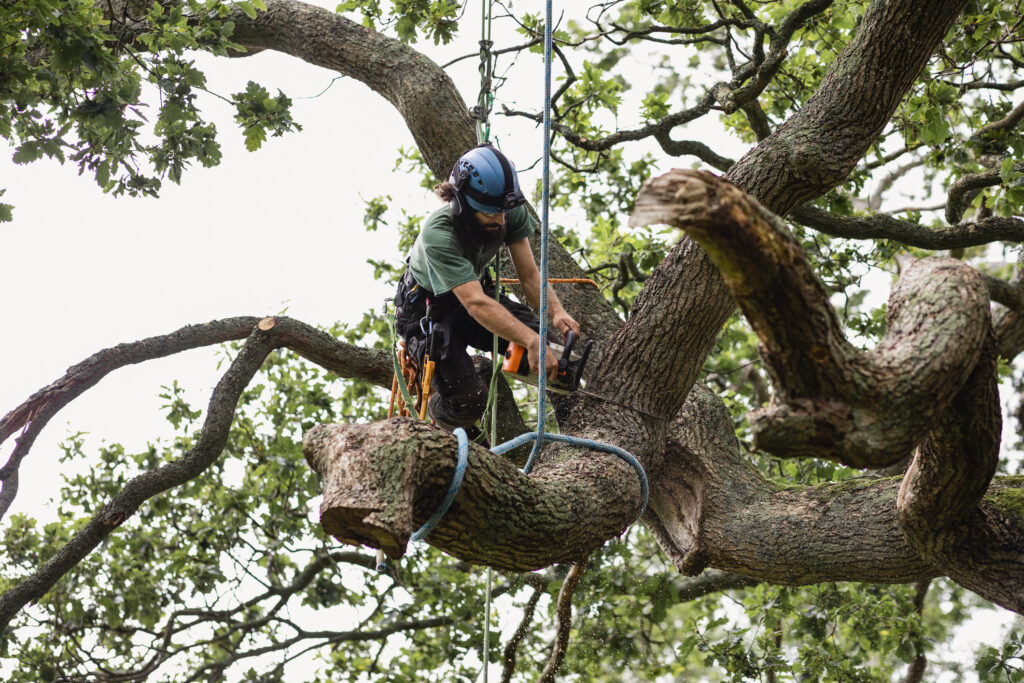
That changes the tree removal job completely. On a rural block you can often drop a tree in one piece. In Ashfield, Mosman or Baulkham Hills you are dismantling it in sections, roping each limb down so it never free-falls, and often craning material out over a roof. That is skilled, slow work, and it is the single biggest driver of what you will pay.
Do You Need Council Approval to Remove a Tree?
In most of Sydney, yes. Trees on private land in urban areas are protected under Chapter 2 of the State Environmental Planning Policy (Biodiversity and Conservation) 2021, which each council then applies through its own tree or vegetation Development Control Plan. You can read the state framework on the NSW Department of Planning page covering vegetation in non-rural areas.
The practical upshot: your council sets thresholds, usually based on height, trunk diameter and canopy spread. Cross the threshold and you need a permit before a single cut is made.
Typical exemptions
Most Sydney councils exempt some or all of the following, but the detail varies street by street:
- Trees below the size threshold, often around 3 to 5 metres tall
- Listed noxious or weed species, such as privet, lantana and often camphor laurel
- Trees within a set distance of an approved dwelling, commonly one to three metres
- Genuinely dead or dangerous trees, though councils usually want photos or an arborist note
- Clearing allowed under the bushfire 10/50 scheme in designated entitlement areas
Heritage conservation areas and heritage-listed properties usually strip those exemptions away entirely. If your property sits in one, assume you need approval.
Unauthorised removal is expensive. Councils can issue penalty notices or take the matter to the Land and Environment Court, and fines for illegally removing a significant tree routinely run into the tens of thousands of dollars. A permit application costing $100 to $200 is cheap insurance.
What Tree Removal Costs in Sydney
Broad ranges as a sanity check, not a quote:
- Small tree under 5 metres with clear access: $300 to $700
- Medium tree, 5 to 12 metres: $700 to $2,000
- Large tree, 12 to 20 metres: $2,000 to $5,000
- Very large or hazardous gum, or anything needing a crane: $5,000 to $15,000 or more
Stump grinding is usually quoted separately, typically $100 to $400 for a small to medium stump.
What pushes the price up
Access is king. A crew that can back a chipper and tipper to the base of the tree will always beat a crew that has to hand-carry every branch 40 metres through a side gate. Proximity to power lines can require an accredited operator or a scheduled outage. Proximity to buildings forces sectional dismantling. Species matters too: dense hardwood gums are heavier and slower than a soft-wooded palm of the same height. Emergency or after-hours work carries a premium.
Always get three written quotes. Make sure each one specifies whether stump grinding, green waste removal and site clean-up are included, because that is where cheap quotes quietly hide extra costs.
The Removal Process, Step by Step
- Site assessment. A qualified arborist inspects the tree, checks for defects, decay and lean, and identifies the drop zone, power lines and structures at risk.
- Approvals. Permit lodged with council, or exemption documented.
- Site set-up. Drop zones taped off, ground protection laid, neighbours notified.
- Dismantling. A climber or elevated work platform operator removes limbs progressively from the top down, roping down anything that cannot free-fall.
- Sectional felling of the trunk, or a single controlled fell if there is room.
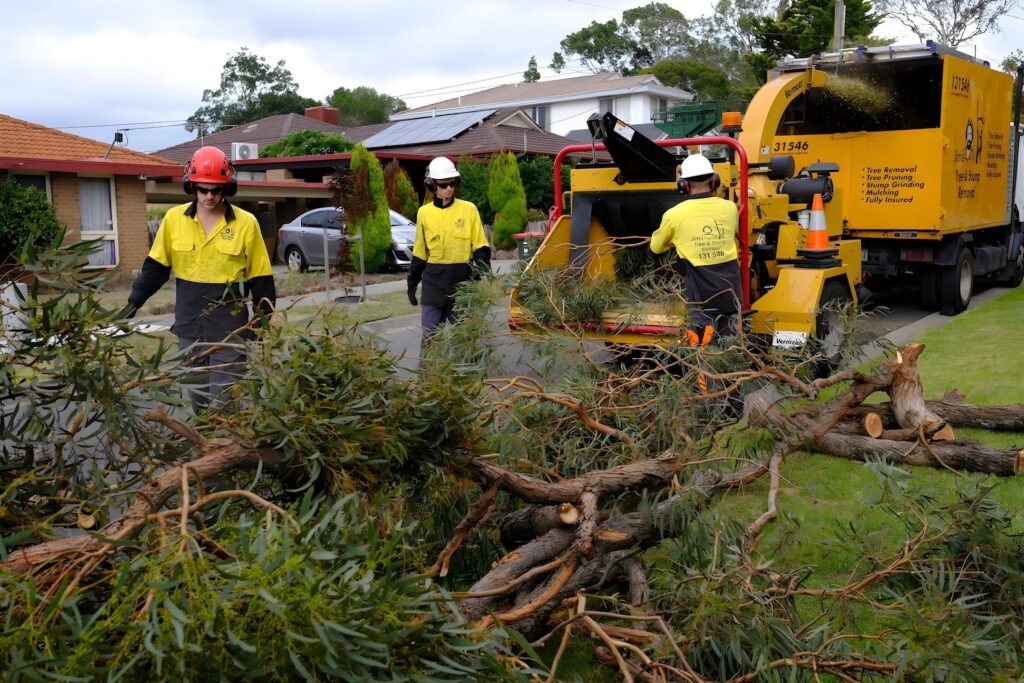
- Processing. Limbs are chipped on site, trunk sections are cut into rounds for milling or firewood.
- Stump grinding, if ordered, and final rake-out.
A straightforward suburban removal is a half-day job. A big gum over a house can take two or three days.
Safety: Why DIY Removal Goes So Wrong
Tree work is one of the most dangerous trades in the country. Falls from height, being struck by falling limbs, chainsaw kickback and contact with live power lines cause serious injuries and deaths every year. SafeWork NSW publishes detailed guidance and a code of practice for the industry on its page covering tree work and arboriculture, including a checklist for homeowners hiring contractors.
The non-negotiables when hiring: a minimum Certificate III in Arboriculture for anyone climbing or supervising, an AQF Level 5 arborist for written reports, at least $10 million to $20 million public liability cover, and current workers compensation. Ask for the certificates. A reputable company will send them without hesitation.
Choosing a Sydney Tree Removal Company
Red flags: door-knocking after a storm, cash-only pricing, no written scope, no ABN, pressure to skip the council permit, and quotes that come in at half of everyone else. Green flags: an arborist attends the quote, the quote is itemised, they offer to lodge the council paperwork, and they carry their own chipper and stump grinder rather than subcontracting everything.
What Happens to the Timber
Good operators do not send anything to landfill. Chipped material becomes mulch, straight trunk sections become milled timber or seasoned firewood, and only contaminated material goes to a licensed facility. If you want the mulch, say so at quoting stage. Most crews will happily leave a load rather than pay tip fees.
Bottom Line
Tree removal in Sydney comes down to three things: check whether you need council approval before you commit, hire on qualifications and insurance rather than price, and get the scope in writing including stump and clean-up. Do that and a job that sounds risky becomes routine.
