
Archive March 28, 2026

How to Choose the Best Tree Pruning Services Sydney for Large Properties

tree pruning services sydney

What makes tree pruning on large properties different?

Large properties usually involve bigger trees, more trees, and more access constraints. The best services treat it like a planned job, not a quick trim.

They should be comfortable coordinating machinery, traffic control if needed, and staged pruning so the property stays usable. They also need the experience to balance safety, tree health, and aesthetics across many zones, not just one front-yard tree.

How can they tell if a service is properly qualified and insured?

They should be able to show public liability insurance and workers compensation details without hesitation, which is especially important when hiring tree pruning services Sydney for residential or large-scale work. For large properties, higher coverage is common, so the policy limits matter.

They should also demonstrate arborist capability, not just “tree lopping” experience. If they mention standards-based pruning, tree biology, and risk assessment, that is a good sign they understand professional tree care rather than just removal-style cutting.

What questions should they ask about pruning methods and tree health?

They should ask exactly what cuts will be made and why, especially for mature trees. A good provider explains whether they are reducing weight, improving structure, clearing buildings, or removing deadwood.

They should avoid services that push heavy topping or indiscriminate cutting. Proper pruning focuses on tree health, structural integrity, and long-term maintenance cycles, not quick visual “neatening” that leads to weak regrowth and higher future risk.

How do they confirm the team can handle access, equipment, and logistics?

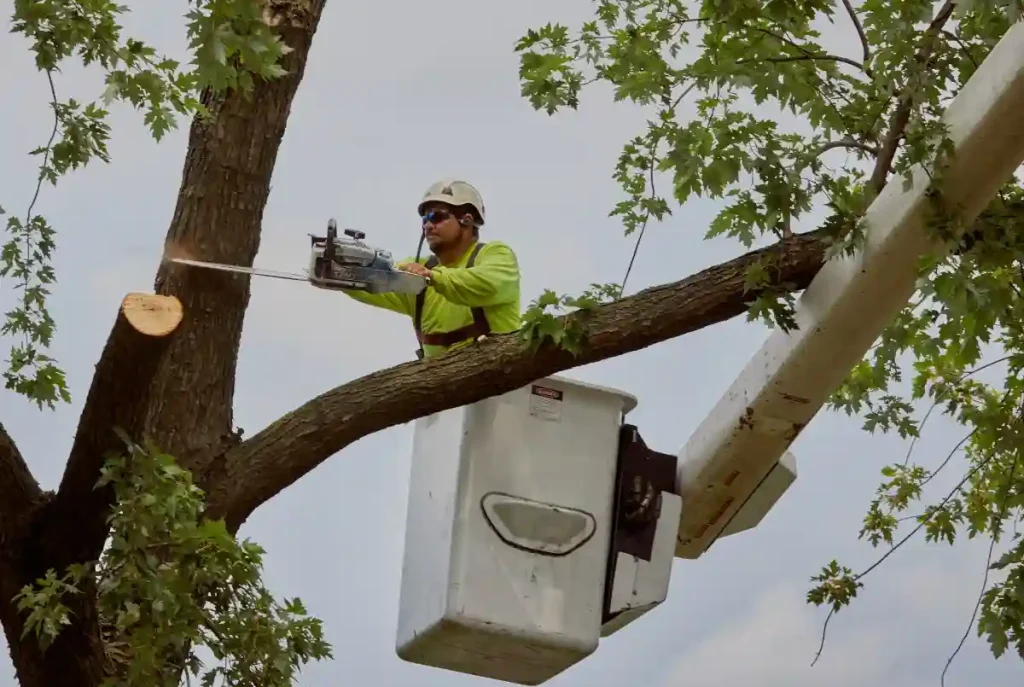
They should ask what equipment will be used and how it will be brought on-site. Large blocks often require elevated work platforms, rigging systems, cranes, or heavy chippers, plus safe drop zones.

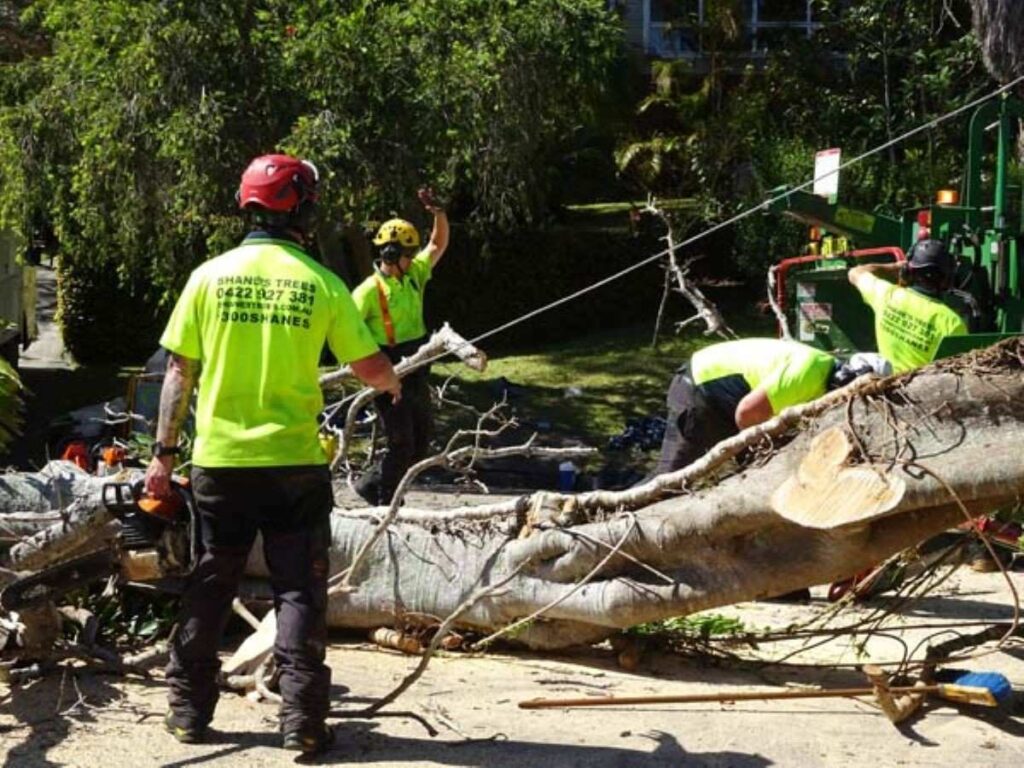
They should also ask about protection for lawns, irrigation, gardens, and driveways. The best teams plan entry and exit routes, use ground protection where needed, and describe how they will manage branches over sheds, fences, pools, and neighbouring lots.

What should they check about council rules and neighbour risks in Sydney?

They should ask whether approvals are needed for the specific site and species. In parts of Sydney, tree preservation controls, heritage constraints, or protected vegetation rules can apply, and mistakes can be expensive.

They should also ask how the team will manage boundary trees and overhangs. A professional service raises neighbour considerations early, confirms property lines if needed, and documents the scope so disputes are less likely.

How can they judge safety standards on a large site?

They should look for a clear safety approach, not vague reassurance. A good provider explains how they will control drop zones, protect people and structures, and manage chainsaw work at height.

They should also ask who will supervise the job and how hazards will be handled, including unstable limbs, powerlines, termites, or storm-damaged trees. If the provider seems casual about high-risk scenarios, that usually carries into the work. You may like to visit https://www.safeworkaustralia.gov.au/media-centre/news/guide-managing-risks-tree-work to learn more guide to managing the risks of tree work.

What does a good quote look like for a large-property pruning job?

They should expect a detailed quote that separates trees or zones, describes the pruning type, and lists inclusions like green waste removal, stump-free finish, and clean-up standards.

They should also confirm what changes the price, such as hidden decay, access changes, or extra rigging. For big properties, the best companies often propose a staged plan or annual cycle, which can be more cost-effective than one massive catch-up prune.
Fruit Tree Pruning Near Me

How should they compare services beyond the cheapest price?

They should compare scope accuracy, pruning quality, and risk management, not just the total. The cheapest quote can be the most expensive outcome if it leads to tree decline, failures in storms, or repeated reactive callouts.

They should prioritise teams that communicate clearly, document their approach, and offer practical options. A strong service feels organised from the first site visit, because large-property pruning is mostly planning done before the first cut. Click here to learn more about tree pruning North Shore: Maintaining Tree Health in Coastal Conditions.

What final checks help them choose confidently?

They should ask for recent local references for similar-sized properties and confirm timelines in writing. They should also ask who handles clean-up and how long the site will be affected.

Most importantly, they should choose a team that treats pruning as long-term tree care. For large properties in Sydney, the best outcome is safer trees, healthier canopies, and a maintenance plan that prevents emergency work later.

FAQs (Frequently Asked Questions)

What makes tree pruning on large Sydney properties different from smaller ones?

Tree pruning on large Sydney properties involves managing bigger and more numerous trees with complex access constraints. Unlike quick trims, the best services treat it as a planned job that coordinates machinery, traffic control, and staged pruning to maintain property usability while balancing safety, tree health, and aesthetics across multiple zones.

How can I verify if a tree pruning service is properly qualified and insured for large properties?

A qualified service should readily provide public liability insurance and workers compensation details with adequate coverage for large properties. They should demonstrate arborist expertise by discussing standards-based pruning, tree biology, and risk assessment rather than just offering basic tree lopping or removal services.

What questions should I ask regarding pruning methods to ensure tree health on my property?

Ask the provider what specific cuts will be made and their purpose—whether it’s reducing weight, improving structure, clearing buildings, or removing deadwood. Avoid services promoting heavy topping or indiscriminate cutting; proper pruning focuses on long-term tree health, structural integrity, and maintenance cycles rather than quick visual neatening that risks weak regrowth.

How do I confirm that the pruning team can handle access, equipment, and logistics for my large property?

Inquire about the equipment they plan to use such as elevated work platforms, rigging systems, cranes, or heavy chippers and how these will be brought onsite. They should also explain protection measures for lawns, irrigation systems, gardens, driveways, and how they manage branches over sheds, fences, pools, and neighboring lots with clear entry and exit routes and ground protection where needed.

What should I check regarding council regulations and neighbour considerations when pruning trees in Sydney?

Verify if approvals are required for your site and specific tree species due to local tree preservation controls, heritage constraints, or protected vegetation rules. Ensure the team proactively manages boundary trees and overhangs by discussing neighbour considerations early on, confirming property lines if necessary, and documenting the scope of work to minimize potential disputes.

How can I assess the safety standards of a tree pruning service on a large site?

Look for a clear safety plan detailing how drop zones will be controlled, people and structures protected, and chainsaw work at height managed. Ask who supervises the job and how hazards like unstable limbs, powerlines, termites, or storm damage are handled. Providers who appear casual about high-risk scenarios often carry that approach into their work—choose those with thorough safety protocols.
Stump Grinding Costs Sydney 2026: Price Per Diameter Guide

stump grinding

If you’ve recently had a tree removed in Sydney, you’re likely staring at the final hurdle: a stubborn, unsightly stump. While felling the tree is the main event, the stump remains anchored by a complex root system that requires specialized machinery to eliminate.

In 2026, the Sydney market for arboriculture has seen a shift due to rising fuel costs and stricter disposal regulations. Understanding the nuances of stump grinding costs in Sydney is essential to ensure you aren’t overcharged and that the job is done deep enough for your future landscaping plans.

See more: 7 Ways to Use Wood Mulch to Boost Your Garden Health

What is Stump Grinding and Why is it Necessary?

Stump grinding is the process of using a high-speed rotating disk with carbide-tipped teeth to chew away at tree wood. Unlike full “stump removal”—which involves an excavator pulling the entire root ball out of the earth—grinding focuses on the stump itself and the immediate surface roots.

Why Sydney homeowners choose grinding:

  • Cost-Efficiency: It is significantly cheaper than full excavation.
  • Minimal Disruption: It won’t destroy your entire lawn or underground pipes.
  • Instant Re-use: The process creates nutrient-rich mulch you can use in your garden immediately.
  • Safety & Pests: Leaving a stump invites termites (a major concern in NSW) and creates a permanent trip hazard.

The Core 2026 Pricing Structure in Sydney

In Sydney, professional arborists typically use one of two pricing models: a flat minimum call-out fee for small jobs or a per-centimeter rate for larger projects.

1. The Minimum Call-Out Fee

For 2026, most reputable Sydney-based specialists have set a minimum call-out fee of $200–$250. This covers the “logistics tax”—transporting heavy machinery through Sydney traffic, tolls (M4/M5/M8), and the time required for site setup and safety checks. If you have a single small stump (under 30cm), expect to pay this baseline amount regardless of how fast the job takes.

2. Price Per Diameter (Centimeter)

For stumps exceeding the minimum threshold, Sydney professionals usually charge by the width of the stump at its widest point (the flare at ground level).

Stump Type2026 Cost Per CM (Avg)50cm Stump Total
Softwood (e.g., Palm, Pine)$3.00 – $3.50$150 – $175*
Standard Hardwood$3.50 – $4.00$175 – $200*
Dense Hardwood (e.g., Gum, Ironbark)$4.00 – $4.50$200 – $225*

*Note: If the total falls below the $200-$250 minimum call-out, the higher minimum fee will apply.


Hardwood vs. Softwood: The 20% “Gum Tax”

In Sydney, the species of your tree dictates the “grindability” of the stump. Specifically, hardwoods like Sydney Blue Gum or Ironbark typically cost 20% more to grind than softwoods like Palms.

Why Hardwood Costs More:

  • Density: Hardwood is physically denser, meaning the cutting teeth on the grinder dull faster and require more fuel to power through.
  • Time: A 60cm Blue Gum stump may take 90 minutes to grind, whereas a 60cm Cocos Palm might take only 20 minutes.
  • Root Complexity: Native Australian Gums often have “lateral” surface roots that extend far from the trunk, requiring additional passes with the machine.
stump grinding

Key Factors That Influence Your Quote

Beyond just the diameter, several variables can push your Sydney stump grinding quote toward the higher end of the scale:

1. Site Accessibility

Sydney’s inner-west and eastern suburbs are famous for narrow side-gates. If a standard machine cannot fit through a gate (usually requiring 750mm–900mm width), the arborist must use a smaller, hand-portable grinder. These smaller machines take longer to do the same work, often increasing the labor cost by 15–25%.

2. Grinding Depth

A “standard” grind usually goes 150mm–200mm below the surface. However, if you plan to lay a concrete slab or a driveway, you may need a Deep Grind (up to 400mm+). This involves moving more earth and significantly more machine time.

3. Surface Root Tracing

If your tree has “tributary” roots lifting up your lawn, you’ll need “root tracing.” This is usually charged as an add-on, ranging from $50 to $150 depending on how far the roots spread.

4. Waste Disposal

The grinding process creates a large volume of mulch (the volume of the hole plus air). Most quotes include leaving this mulch on-site for you to use. If you want the arborist to rake it up, bag it, and haul it away, expect an additional $80–$120 for labor and tip fees.


The Step-by-Step Professional Grinding Process

When you hire a pro in Sydney, here is the framework they follow to ensure safety and efficiency:

  1. Underground Service Check: The operator checks for “Dial Before You Dig” plans to ensure no gas or water lines are under the stump.
  2. Clearance: Rocks and debris are removed from the base to prevent damage to the grinder’s teeth.
  3. The Primary Grind: The machine sweeps across the stump, taking off 2-5cm layers at a time.
  4. Lateral Root Removal: The machine “chases” any visible surface roots.
  5. Backfilling: The hole is filled with the resulting mulch to prevent a hazard, or left open for fresh soil if requested.

DIY vs. Professional: Is it Worth It?

Many Sydney residents consider hiring a stump grinder from a local equipment hire shop. In 2026, daily hire for a small grinder is roughly $180–$250.

The Hidden Costs of DIY:

  • Trailer Hire: $60–$100.
  • Fuel & Protection Gear: $40.
  • Risk: If you hit a rock and break a tooth on a hire machine, you are often liable for the replacement cost (up to $50 per tooth).
  • Effectiveness: Commercial grinders used by pros are usually 3x more powerful than hire-shop models, saving you a full day of back-breaking labor.

Expert Tip: If you have more than three stumps, the professional “per stump” rate usually drops significantly. Always ask for a “bulk discount” if you have multiple items for removal.


Common Mistakes to Avoid

  • Ignoring Surface Roots: Only grinding the “puck” (the center) while leaving the roots will lead to lawn mower damage later.
  • Underestimating Depth: If you are planting a new tree in the same spot, you must specify a deep grind to remove the core root ball.
  • Not Checking Insurance: Always ensure your Sydney arborist has Public Liability insurance (minimum $10M) to cover potential damage to fences or underground pipes.

Frequently Asked Questions (FAQ)

1. How do I measure my stump for a quote?

Measure at the widest point where the trunk meets the ground (the “root flare”), not just the top of the cut timber. This gives the most accurate diameter for pricing.

2. Will the stump grow back after grinding?

Most species will not. However, certain “prolific” trees like Willows or some Eucalyptus may send up shoots. You can request a herbicide treatment for an extra $30–$50 to guarantee no regrowth.

3. Is stump grinding included in tree removal?

Not usually. Most Sydney tree loppers quote felling and grinding as two separate line items. Always clarify if the “total price” includes the stump.

4. How long does the mulch take to rot?

Fresh woodchip mulch can take 6–12 months to break down completely. It is excellent for weed suppression but can temporarily strip nitrogen from the soil if dug in too early.

5. Do I need a council permit for stump grinding in Sydney?

Usually, no. While removing a living tree often requires a permit from councils like Northern Beaches or Sutherland Shire, once the tree is legally removed, the stump is considered a “maintenance” item.


Conclusion: Securing the Best Rate in Sydney

Navigating stump grinding costs in Sydney doesn’t have to be a guessing game. By measuring your stump’s diameter and identifying if it’s a dense hardwood like a Gum or a softer species like a Palm, you can estimate your costs within a 10% margin.

Remember that while price is important, the “minimum call-out” fee of $200–$250 is standard for the industry in 2026. To get the best value, try to bundle multiple stumps into one visit or coordinate with a neighbor to share the call-out fee.

Internal Linking & Authority Suggestions:

  • Internal Link: [Tree Removal Costs Sydney 2026] (Anchor: “average tree removal costs”)
  • Internal Link: [Best Native Trees for Sydney Gardens] (Anchor: “replanting after stump removal”)
  • External Reference: Check the NSW Department of Primary Industries for guidelines on termite prevention in residential wood waste.
  • External Reference: Refer to SafeWork NSW for arborist safety standards and insurance requirements.